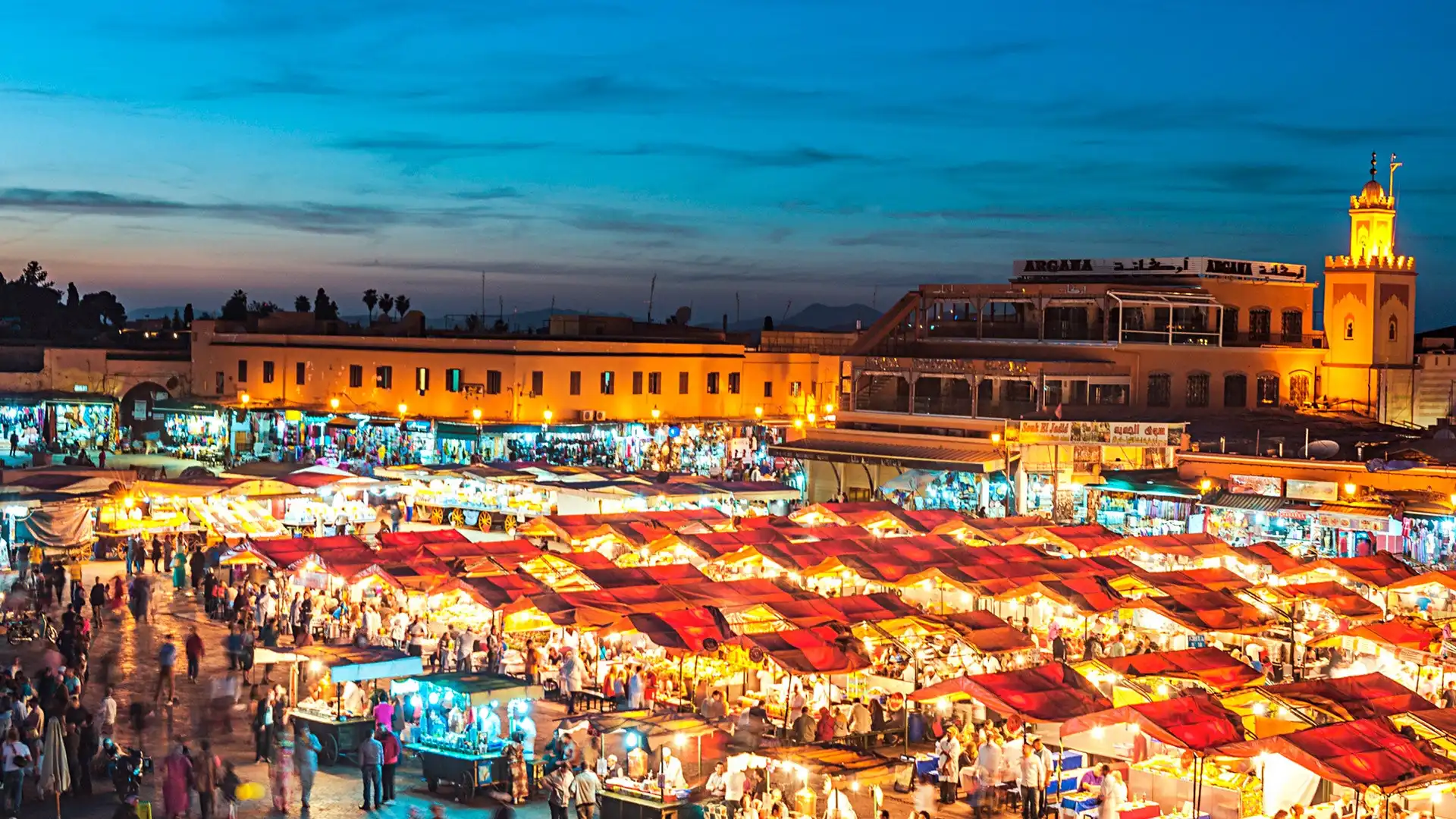
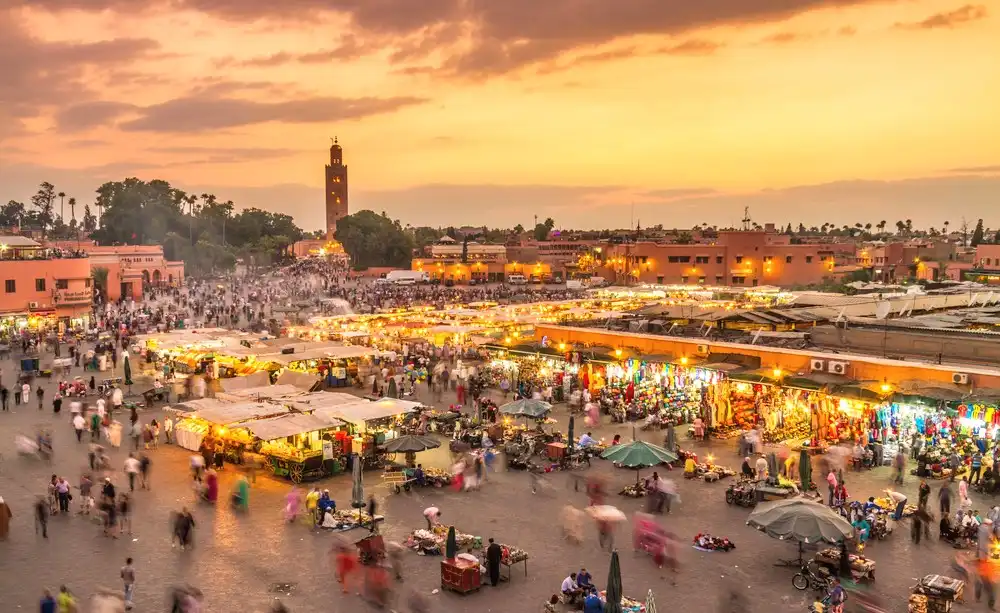
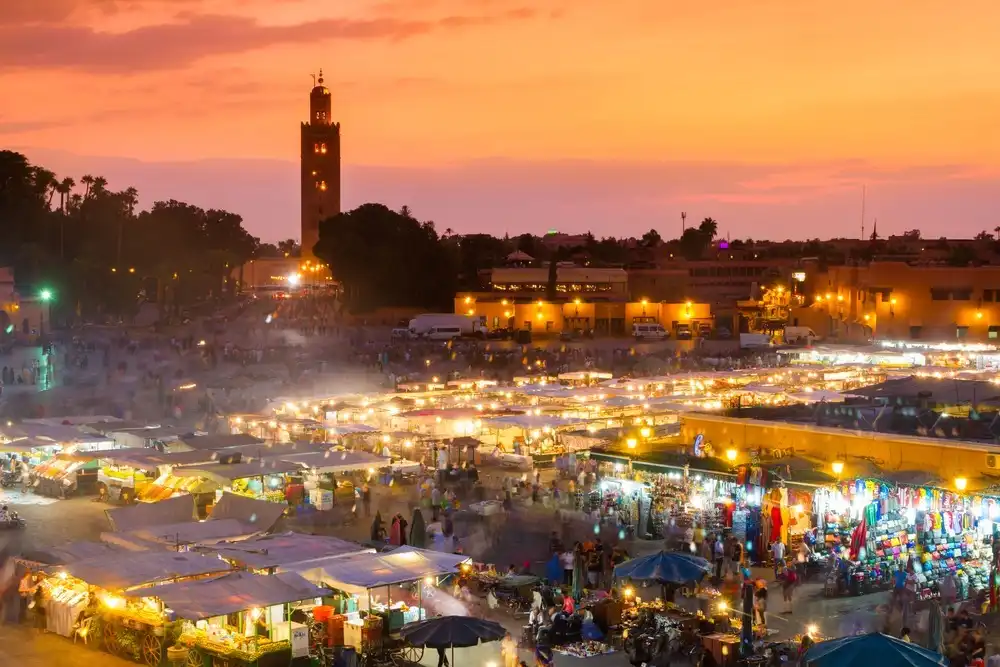
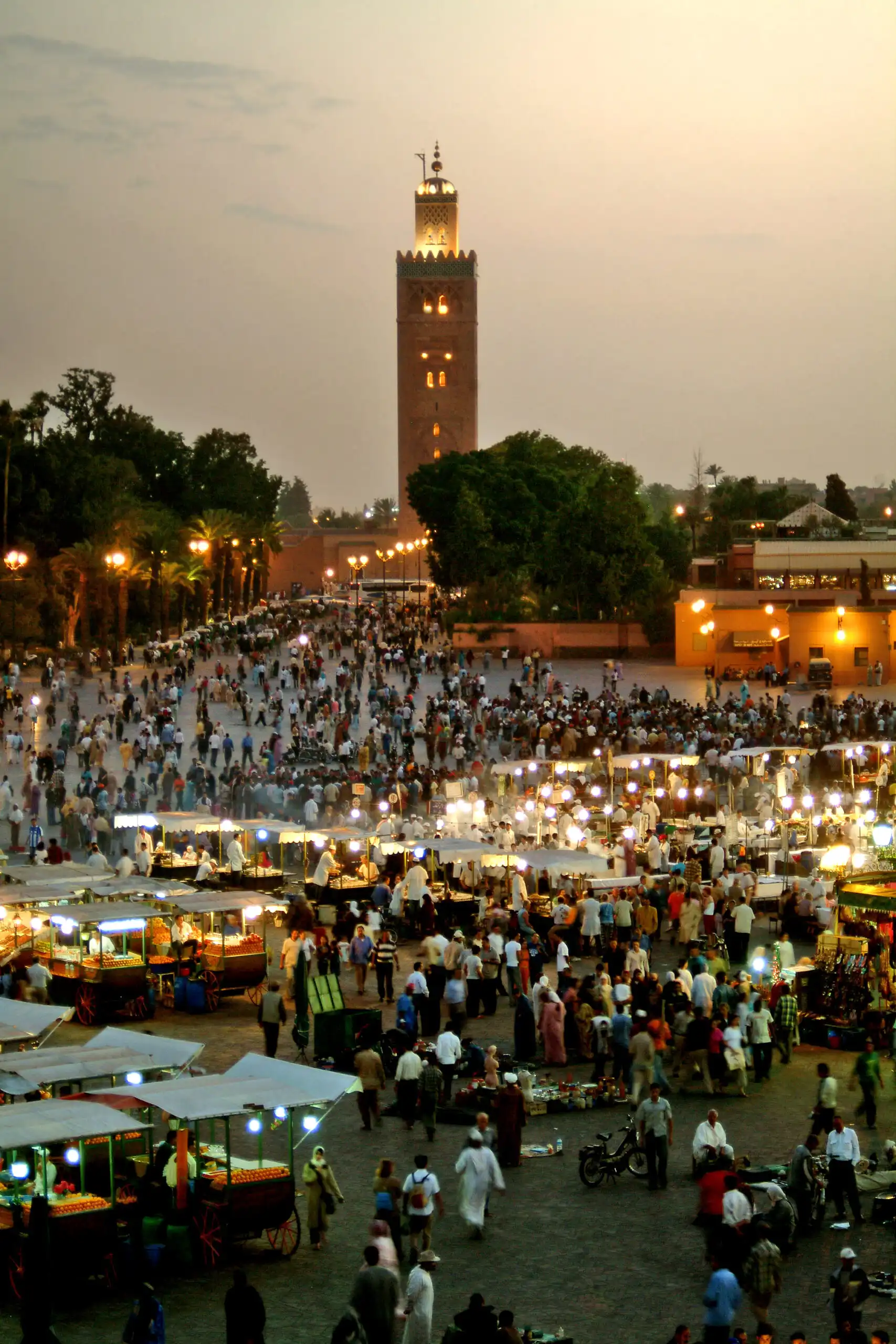
Marrakech, a city steeped in history and cultural richness, is home to one of its most iconic landmarks – Jemaa el-Fnaa. This bustling square is not just a physical space; it’s a vibrant tapestry woven with the threads of tradition, history, and modernity. In this article, we delve into the heart of Jemaa el-Fnaa, exploring its cultural significance, historical background, and the unique experiences it offers.
The Historical Tapestry of Jemaa el-Fnaa
Jemaa el-Fnaa Through the Ages
Jemaa el-Fnaa has witnessed centuries of history unfold on its cobblestone streets. Dating back to the 11th century, it was originally established as a marketplace during the rule of the Almoravid dynasty. Over the years, it evolved into a multifaceted space, hosting everything from public executions to storytelling sessions.
Architectural Marvels
The architecture surrounding Jemaa el-Fnaa reflects a harmonious blend of Islamic and Moorish influences. The Koutoubia Mosque, with its towering minaret, stands as a testament to the city’s religious and architectural legacy. The intricate details of the Bahia Palace and the Saadian Tombs showcase the craftsmanship of a bygone era.
Cultural Kaleidoscope
The Souks: A Shopper’s Paradise
Jemaa el-Fnaa is surrounded by a labyrinth of souks, each specializing in unique goods. From vibrant textiles to aromatic spices, the market stalls offer a sensory journey through Morocco’s rich cultural tapestry. Visitors can haggle for treasures and immerse themselves in the vibrant colors and scents that define the Marrakech experience.
Street Performers and Storytellers
As the sun sets over Jemaa el-Fnaa, the square transforms into a stage for street performers and storytellers. Acrobats, musicians, and snake charmers captivate audiences with their skills, creating an atmosphere that’s both magical and lively. This nightly spectacle is a must-see, offering a glimpse into Morocco’s oral storytelling traditions.
Navigating the Modern Landscape
Culinary Adventures
Jemaa el-Fnaa is a culinary haven, boasting an array of street food stalls offering Moroccan delicacies. From savory tagines to sweet pastries, visitors can embark on a gastronomic journey, savoring the authentic flavors that define Moroccan cuisine. The food stalls provide a sensory delight, with the fragrant aroma of spices filling the air.
Contemporary Attractions
While rooted in history, Jemaa el-Fnaa has embraced modernity with open arms. Rooftop cafes and boutique shops now coexist with traditional market stalls, creating a dynamic blend of old and new. This harmonious coexistence is a testament to Marrakech’s ability to evolve while preserving its cultural identity.
Adding Value to Your Journey
To enhance your exploration of Jemaa el-Fnaa, consider these practical tips:
Cultural Etiquette: Respect local customs and traditions to ensure a positive and enriching experience.
Guided Tours: Opt for guided tours to gain deeper insights into the historical and cultural aspects of Jemaa el-Fnaa.
Photography: Capture the essence of Jemaa el-Fnaa but be mindful of local sensitivities, especially when photographing people.
Local Recommendations: Engage with locals to discover hidden gems and lesser-known attractions around the square.
Capturing Memories with Every Step
As you traverse the lively streets of Jemaa el-Fnaa, let the blend of history, culture, and modernity guide your journey. Whether you’re captivated by the storytelling traditions, indulging in local cuisine, or admiring the architectural marvels, every step in Jemaa el-Fnaa is a step into the heart of Marrakech’s soul.
Embark on a journey that transcends time and tradition, and let the vibrant tapestry of Jemaa el-Fnaa weave unforgettable memories into your travel story. Immerse yourself in the magic of Marrakech’s beating heart, where every corner tells a tale, and every experience is a brushstroke on the canvas of a city that never ceases to amaze.